
Material · PU
Polyurethane Foam (PU)
PU is the soft one: open cells that compress easily and cradle products too light or delicate for closed-cell foams. Optics, ceramics, instruments, and irregular shapes settle into PU instead of bouncing on it.
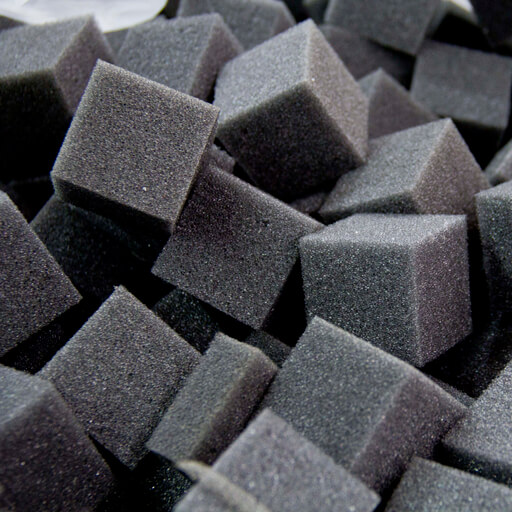
We supply PU plain and convoluted (egg-crate), in sheets, case linings, and cavity inserts — often as the soft top layer over a firm PE base.
Properties
| Cell structure | Open cell |
| Typical densities | 1 – 2 pcf |
| Feel | Soft, conforming |
| Formats | Sheets, convoluted, die-cut inserts |
| Note | Open cells absorb water — keep dry in transit |
Why choose it
- Gentlest cushioning for fragile, light items
- Conforms to irregular shapes
- Convoluted profile doubles surface compliance
Best for
Optics, glass, and ceramicsInstrument cases (convoluted lining)Soft top layers in multi-density inserts
Frequently asked questions
When should I avoid PU?
For heavy products (it bottoms out), wet environments (open cells absorb water), and returnable loops (it fatigues faster than PE). In those cases we move you to PE or XLPE.
What is convoluted foam for?
The egg-crate profile increases compliance and grip at a lower material cost — the standard lining for lids and instrument cases.