
Material · PE
Polyethylene Foam (PE)
Polyethylene is the default material of protective packaging for a reason: closed cells that don't absorb water, a firm but forgiving compression response, and the ability to take hit after hit without crumbling or taking a set. When engineers say "foam" without qualifying it, they usually mean PE.
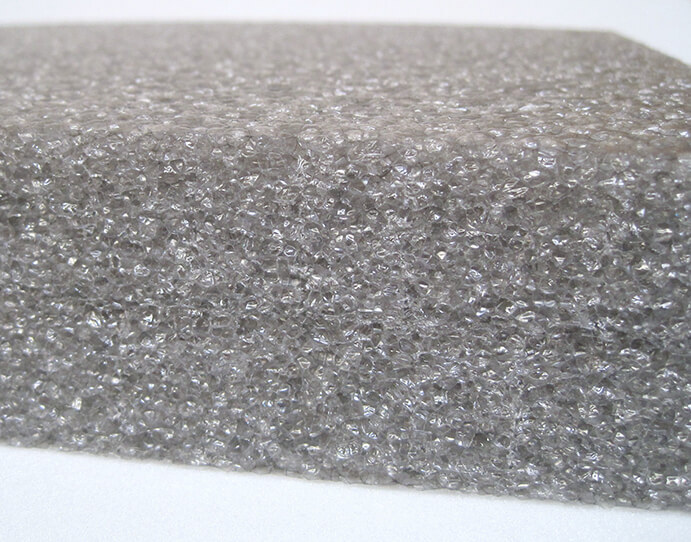
IPS extrudes profiles (corners, channels, tubes) and fabricates plank-based parts (inserts, pads, end caps) in PE across multiple densities — matched to product weight, fragility, and how many trips the pack must survive.
Properties
| Cell structure | Closed cell |
| Typical densities | 1.7 – 9 pcf (2.2 pcf most common) |
| Water absorption | Essentially none — closed cells |
| Impact behavior | Multi-impact recovery; resists compression set |
| Surface | Semi-smooth; non-dusting |
| Fabrication | Extruded profiles, CNC, die-cut, laminated |
Why choose it
- Best all-around cushioning for medium-weight products
- Survives repeated impacts and returnable loops
- No water uptake — stable in humid or wet transit
- Clean fabrication on every process we run
Best for
Frequently asked questions
What density of PE should I use?
2.2 pcf covers most protective work. Step down toward 1.7 pcf for lighter products and cost, up to 4–6 pcf where heavy parts bear on small areas. We calculate static loading from your part weight and bearing area.
Is PE foam reusable?
Yes — closed-cell PE recovers after impact and resists compression set, which is why it's the standard for returnable dunnage programs that loop hundreds of times.
PE vs EPE — what's the difference?
Extruded PE plank is denser and firmer; EPE (expanded PE) is lighter, softer, and cheaper per cubic inch. EPE wins for surface protection and void fill, PE for structural cushioning.