
Material · APE ESD
Anti-Static PE Foam
Standard foams generate and hold static charge as products slide against them — enough to kill a sensitive component without anyone noticing until the field failure. Anti-static PE is treated so charge bleeds away instead of accumulating, and it wears the industry's pink so handlers can identify ESD-safe packaging at a glance.
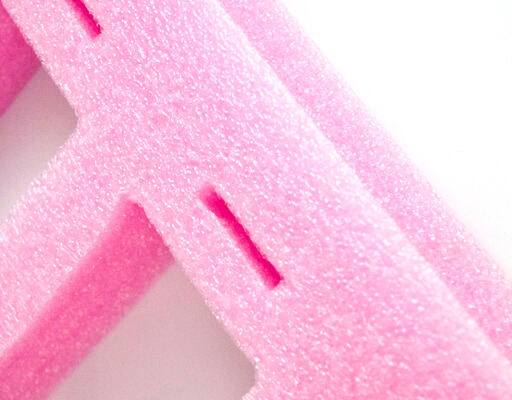
IPS fabricates anti-static trays, pads, separators, and case inserts for the electronics corridor on both sides of the border — from single prototypes to kanban tray programs.
Properties
| Cell structure | Closed cell polyethylene, anti-static treated |
| Color | Pink (industry ESD convention) |
| Function | Dissipates triboelectric charge; prevents accumulation |
| Typical densities | 1.7 – 4 pcf |
| Fabrication | Die-cut, CNC, laminated builds |
Why choose it
- Protects static-sensitive electronics through the supply chain
- Same cushioning mechanics as standard PE
- Visual ESD identification on the line
Best for
Frequently asked questions
Is anti-static the same as conductive foam?
No. Anti-static foam prevents charge from building up as parts move against it. Conductive foam creates a grounded path, typically for lead insertion. Most board and module packaging needs anti-static; tell us the application and we'll confirm.
Does the anti-static property wear out?
Surfactant-treated foams lose effectiveness over years and with heavy handling, which is why ESD packaging programs cycle trays on a schedule. For long-life programs we'll spec accordingly.