
Material · RPE
Recycled Polyethylene (RPE)
RPE reprocesses polyethylene back into protective foam — same closed-cell behavior, meaningfully lower cost, and a sustainability line your customers increasingly ask about. Color runs darker and less uniform than virgin PE, which is why RPE lives in industrial and distribution packaging rather than retail presentation.
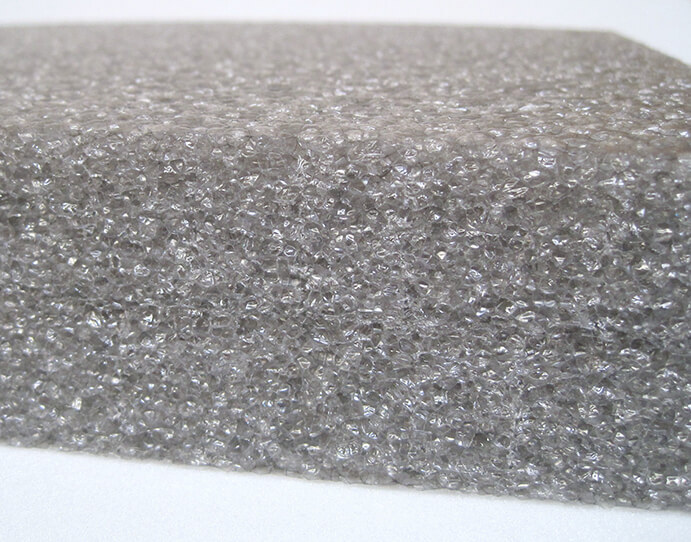
For corner protectors, layer pads, and dunnage where the foam works out of sight, RPE is usually the highest-value material on our rate card.
Properties
| Cell structure | Closed cell |
| Typical densities | 1.7 – 4 pcf |
| Water absorption | Essentially none |
| Color | Gray/mixed tones — varies by batch |
| Fabrication | Extruded profiles, die-cut, CNC |
Why choose it
- Lowest-cost closed-cell protection
- Recycled content for sustainability targets
- Performance close to virgin PE in most industrial duty
Best for
Frequently asked questions
Does recycled PE protect as well as virgin?
For most industrial cushioning duty, yes — the closed-cell mechanics are the same. Where color consistency or the tightest cushioning tolerances matter, we spec virgin PE.
How much does RPE save?
Typically 15–25% versus virgin PE at like-for-like dimensions — quote both in the tool and compare instantly.